
Understanding the Benefits of Humidifiers
Humidifiers play a crucial role in maintaining a comfortable and healthy indoor environment, particularly during the dry seasons when air moisture levels decline. By adding moisture to the air, these devices significantly improve indoor air quality. Optimal humidity levels, ideally between 30-50%, support the respiratory system and overall health by preventing the air from becoming too dry. This is especially beneficial for individuals suffering from allergies or asthma, as humidifiers can alleviate their symptoms by keeping the airways moist and reducing irritants like dust and pollen.
Moreover, dry air can exacerbate respiratory issues, leading to increased discomfort during cold and flu season. For those with preexisting conditions, a humidifier can retain moisture in nasal passages and throat, making it easier to breathe and reducing the likelihood of infections. Moist air helps thin mucus, allowing for better sinus drainage and creating a more conducive environment for recovery.
Beyond health benefits, the use of a home humidifier can enhance overall comfort. In winter months, heating systems often strip humidity from indoor spaces, making the air feel harsh and cold. A humidifier combats this effect, making living spaces more pleasant. Additionally, adequate humidity levels also contribute to the preservation of wooden furniture and flooring, preventing cracks and warping caused by dry air.
Investing in a humidifier not only enhances your comfort but also promotes better health by fostering an environment that mitigates the adverse effects of dry air. With various types of humidifiers available, it is important to select a model that best aligns with the specific needs of your household and local climate. By understanding the advantages they provide, you can make an informed decision about incorporating a humidifier into your home.
Types of Humidifiers: Which One is Right for You?
When considering the purchase of a humidifier, it is important to understand the various types available on the market. Each type of humidifier boasts unique functionalities, benefits, and ideal applications, allowing consumers to select the model that best fits their specific needs and preferences.
One of the most common types is the evaporative humidifier. This model uses a fan to draw air through a wet wick or filter, evaporating water and releasing moisture into the air. Evaporative humidifiers are self-regulating; as the humidity in the room increases, the evaporation process slows down. These devices are ideal for medium to large rooms, as they can handle significant volumes of air, providing a consistent level of humidity without over-saturation.
Another popular option is the ultrasonic humidifier. Utilizing high-frequency vibrations, ultrasonic models create a fine mist of water that is then dispersed into the air. These humidifiers are known for their quiet operation and energy efficiency, making them excellent choices for bedrooms or nurseries. However, since they do not feature a filter, regular cleaning is essential to prevent bacterial growth.
Steam vaporizers, also known as warm mist humidifiers, boil water to create steam, which cools down before being released into the air. This type of humidifier is beneficial for alleviating respiratory issues but may not be suitable for young children due to the heat involved. Conversely, impeller models use a rotating disk to fling water into a diffuser, creating a cool mist. They are quieter than evaporative models and can cover smaller spaces effectively.
Ultimately, the right choice of humidifier depends on factors such as room size, personal preferences, and specific health considerations. By evaluating the functionalities of each type, you can make an informed decision on which humidifier will enhance your indoor air quality and overall comfort.
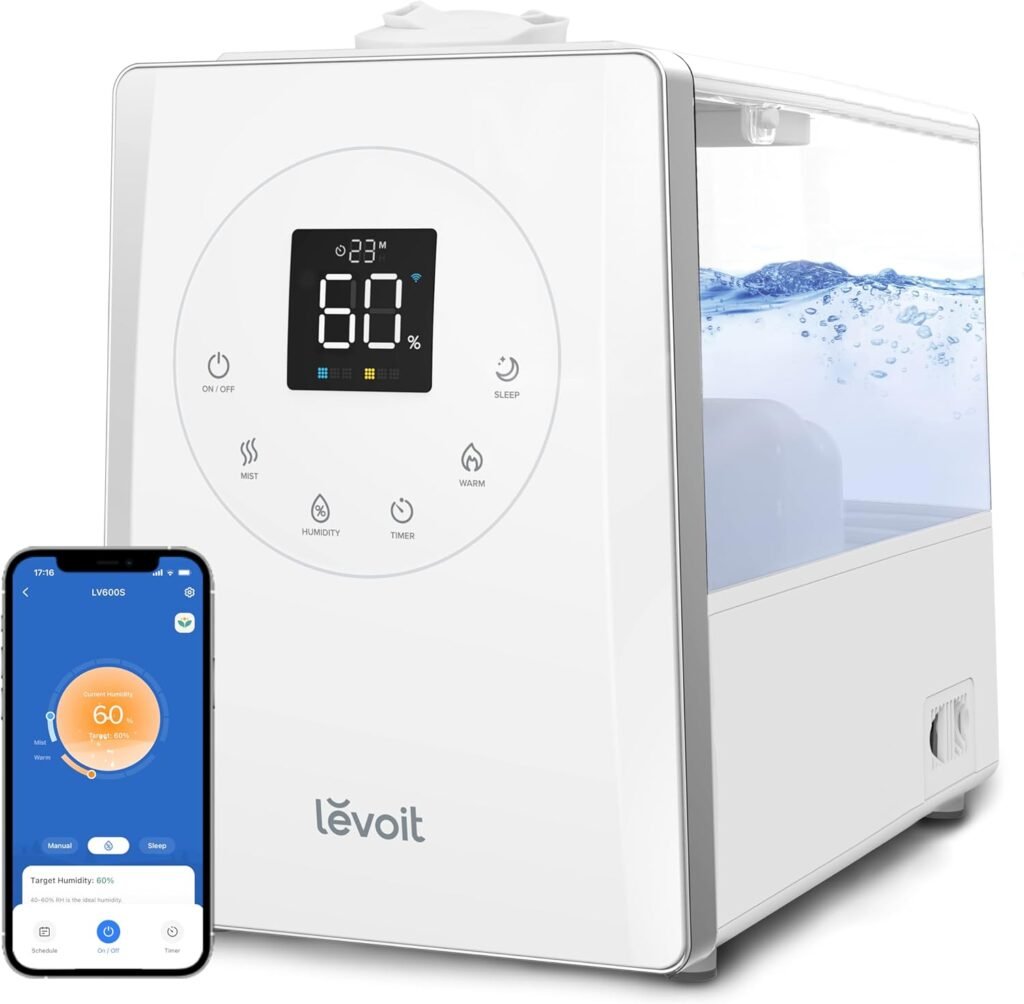
LEVOIT LV600S Smart Warm and Cool Mist Humidifier
Factors to Consider When Buying a Humidifier
When deciding to invest in a home humidifier, it is essential to consider several critical factors to ensure you select the unit that best suits your specific needs. One of the first aspects to evaluate is room size. Different humidifiers are designed to effectively cover various square footage, so understanding the dimensions of the space where the humidifier will be used is vital. A unit that is too small may not adequately raise the humidity level, while one that is too large could lead to excessive moisture, potentially causing mold issues.
Another important consideration is tank capacity. A larger tank typically means longer operating times between refills, which can be particularly advantageous for busy households. However, larger tanks may also result in heavier units, impacting portability. Maintenance requirements are also a key factor; some humidifiers require regular cleaning and filter replacements, while others may have low-maintenance designs. It is prudent to evaluate your willingness and ability to carry out these tasks.
Noise levels should not be overlooked when selecting a home humidifier. Some models operate quietly, making them suitable for bedrooms or workspaces, while others may be noisier and better suited for more open areas. Additionally, consider any added features that may enhance your user experience, such as built-in hygrometers that help monitor humidity levels, or filters that can improve air quality. Choosing a humidifier with advanced functionalities may offer additional convenience and efficiency, aligning with your lifestyle priorities.
Ultimately, being well-informed about these factors will empower you to make a wise choice when purchasing a humidifier, helping to create a comfortable and healthy indoor environment for you and your family.
Tips for Maintaining and Using Your Humidifier
Maintaining your home humidifier is essential for maximizing its efficiency and ensuring a healthy indoor environment. One of the most important aspects of humidifier maintenance is establishing a regular cleaning routine. It is advisable to clean your humidifier at least once a week to prevent the buildup of mold and bacteria, which can thrive in damp conditions. Begin by unplugging the device and removing any water from the tank. Use a mild detergent and warm water to wipe down the tank and base, being particularly attentive to hard-to-reach areas. Rinsing thoroughly with clean water is crucial to avoid leaving any residue.
Next, it’s important to monitor the humidity levels in your home. The optimal humidity level typically ranges from 30% to 50%. Humidity levels above 60% can encourage the growth of mold and dust mites, while levels below 30% can lead to dryness and discomfort. Many modern humidifiers come equipped with built-in hygrometers to help you monitor and adjust settings appropriately. If your device lacks this feature, consider purchasing an independent hygrometer to help maintain ideal humidity levels.
In addition to regular cleaning and humidity monitoring, being aware of common issues can preempt problems. If your humidifier produces a hissing or bubbling noise, it may be clogged and require immediate attention. If it fails to operate, checking the power supply and ensuring the tank is seated correctly may resolve the issue. Remember to replace any filters per the manufacturer’s guidelines. Following these maintenance tips can significantly extend the life of your humidifier, ensuring you reap its many benefits while it continues to function effectively in elevating your home’s air quality.